Flexible Ducts for HVAC Ventilation in Georgia
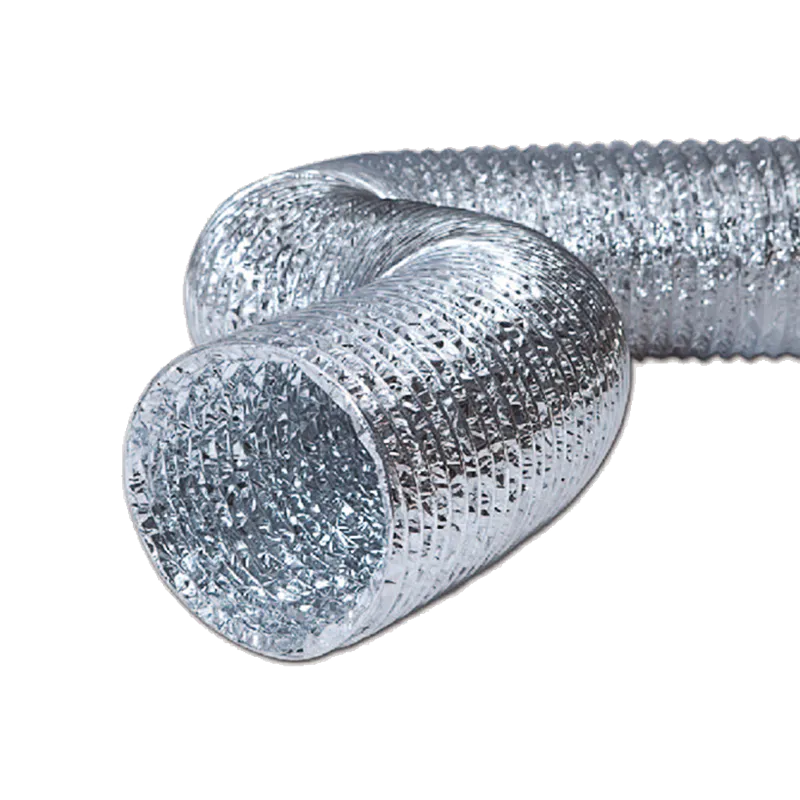
A flexible duct is a bendable ventilation duct used to move air and to connect different components of a ventilation system. The NB Group category currently includes Blue aluminium flexible duct and Blue Ins insulated aluminium flexible duct.
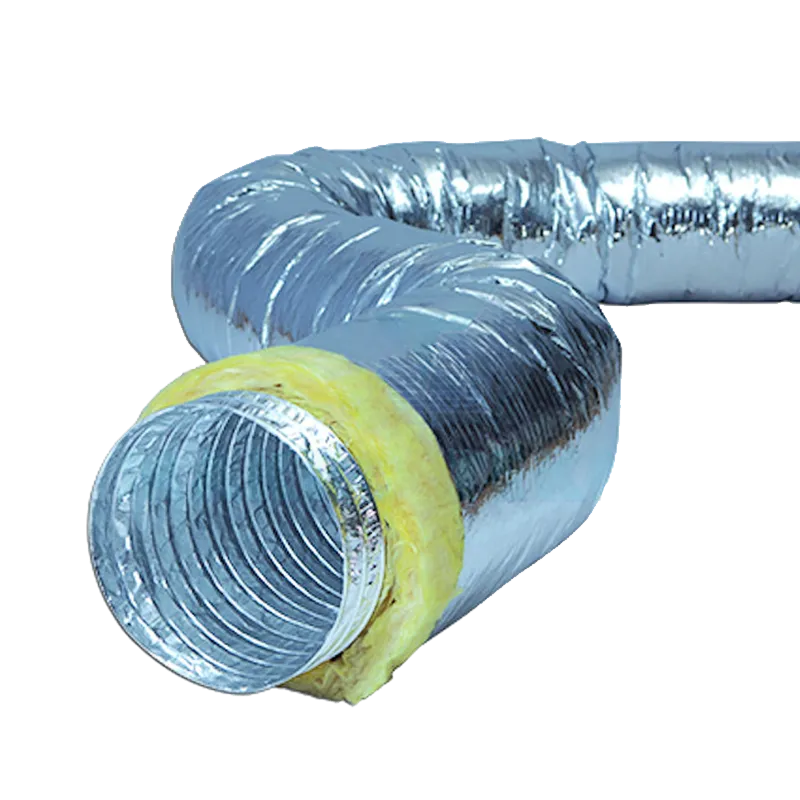
What is a flexible duct?
A flexible duct is used to carry air in ventilation, air conditioning and other HVAC systems when a bendable and relatively easy to install duct is required.
It can be used, for example:
- to connect a fan and an air distribution element;
- to reach a diffuser or grille;
- in the ceiling void;
- to follow a complex route;
- in short and medium length connecting sections;
- in the final sections of a ventilation system.
Because of its flexibility the route can be changed without a large number of additional rigid bends, although excessive bending and compression must be avoided during installation.
What is the difference between a standard and an insulated flexible duct?
The main difference between the two options at NB Group is exactly the presence of thermal insulation. Blue is an aluminium flexible duct, while Blue Ins is an insulated aluminium flexible duct.
| Type | When it can be practical |
|---|---|
| Aluminium flexible duct | When additional thermal insulation is not required in the specific section |
| Insulated flexible duct | When additional control of heat transfer and condensation risk is needed |
The insulated version should be considered in particular when the temperature of the air moving in the duct differs significantly from the ambient temperature.
How to select a flexible duct
1. What diameter is needed?
The duct diameter has to match the system design and the equipment it connects to. An incorrect diameter can increase air velocity, pressure loss and noise, or restrict the required airflow.
2. How much air has to pass through the duct?
The size of the duct has to match the required capacity of the system. Passing a high airflow through a very small diameter duct can increase resistance and noise.
3. How long is the section?
A flexible duct is practical for creating a bendable connection, although an excessively long, coiled or compressed section worsens air movement. Bends, kinks and compression reduce airflow, so a flexible duct should be installed as straight and as properly extended as possible.
Why should a flexible duct not be compressed?
Excessive compression of a flexible duct increases internal resistance and reduces the real airflow. A common mistake is leaving much more duct than the required length and coiling it in the ceiling void.
Instead it is advisable to use the required length, extend the duct as straight as possible, avoid sharp bends and prevent the duct from being squeezed between other structures.
How important are bends?
The sharper the bend, the greater the obstacle it creates for air movement. Particularly problematic are very small radius bends, an almost folded duct, several sharp bends one after another, and a badly formed corner directly at the equipment. With correct installation the route should be as smooth and as straight as possible.
Where are flexible ducts used?
Flexible ducts can be used in offices and commercial spaces to connect diffusers above the ceiling to the main ventilation network, in residential spaces to connect individual points of a ventilation or air conditioning system, in hotels to connect air distribution elements in rooms, in shops and restaurants where a flexible route is needed in the ceiling void, and in technical spaces for a flexible connecting section between ventilation units.
Flexible or rigid duct?
| Flexible duct | Rigid duct |
|---|---|
| Bendable | Keeps its shape |
| Adapts easily to a complex route | Practical for main runs |
| Convenient for final sections | Often better for long runs |
| Compresses easily if installed incorrectly | Less prone to compression |
In practice these products do not exclude each other. The main network is often built with rigid duct, while a flexible section is used to connect to a diffuser or another final point.
Why does a sealed connection matter?
A flexible duct often connects to another component, for example a rigid duct, a diffuser, a grille, a fan or another suitable fitting. If the connection is not sealed, part of the air can be lost from the system. Correctly sealing ductwork reduces air leakage and helps maintain the designed capacity of the system.
What are the most common mistakes when installing a flexible duct?
Leaving excess length
The duct folds and air resistance increases.
Compressing the duct
The internal cross section is reduced and the airflow can decrease as well.
Making sharp bends
System resistance increases undesirably.
Poor fixing
A sagging duct can lose its shape and obstruct air movement.
An unsealed connection
Air can be lost where the duct meets another component.
What information is needed to select a flexible duct?
Before selection it helps to know:
- what diameter is required;
- what airflow has to pass through;
- how long the section is;
- how many bends there will be on the route;
- what the duct connects to;
- whether it is used in a supply or extract system;
- what temperature of air is being moved;
- what temperature and humidity there are in the surroundings;
- whether thermal insulation is required;
- how the duct will be fixed.
With this data a better choice can be made between the standard and the insulated version.
Flexible ducts at NB Group
The NB Group flexible duct category includes Blue aluminium flexible duct and Blue Ins insulated aluminium flexible duct.
When selecting a suitable product it is advisable to assess the diameter, the installation length, the route, the airflow and the need for thermal insulation. NB Group has branches in Tbilisi and Batumi.
Frequently asked questions
A flexible duct is a bendable ventilation duct used to carry air and to connect components of a ventilation system.
It is often used in the ceiling void to connect diffusers, grilles, fans and other HVAC components.
The insulated version has an additional insulation layer that helps reduce heat transfer and, in certain conditions, the risk of condensation.
Compression and sharp bends increase resistance and reduce the airflow.
Technically it depends on the specific system, although excess length, loops and bends are not desirable because they affect air movement negatively.
The diameter has to match the required airflow, the system design and the components the duct connects to.
The category currently includes Blue aluminium flexible duct and Blue Ins insulated aluminium flexible duct.
NB Group branches are located in Tbilisi and Batumi. Contact us for a consultation.