Axial Fans
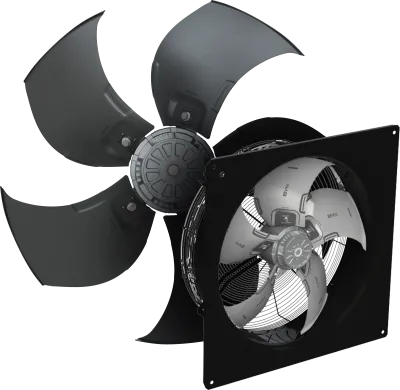
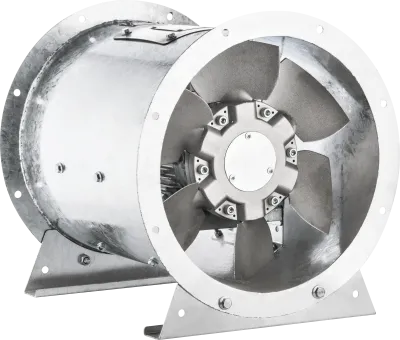
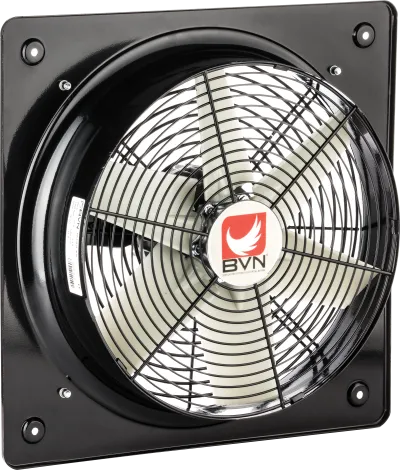
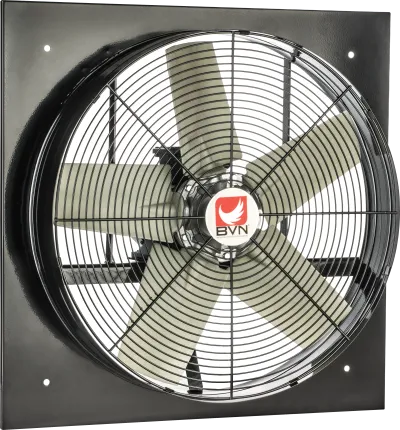
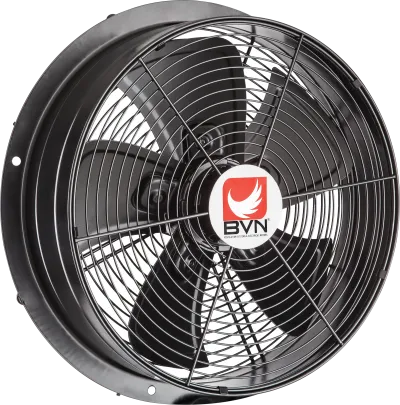
An axial fan moves air in the direction of the motor and impeller axis. Such fans are often used where large volumes of air have to be moved under relatively low system resistance. The NB Group range includes axial fans for various applications.
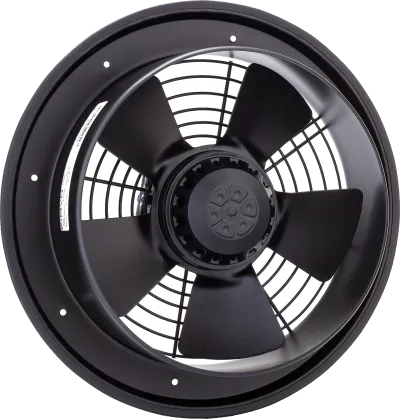
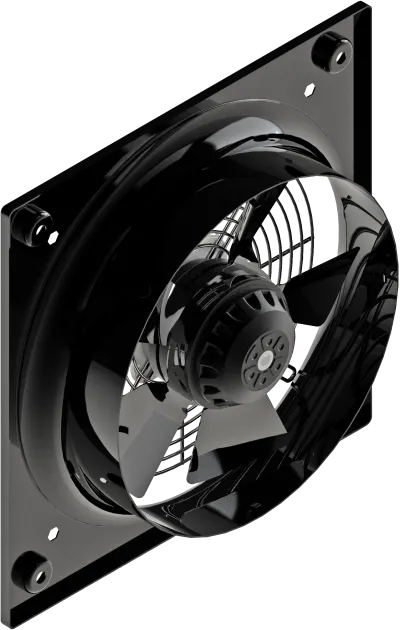
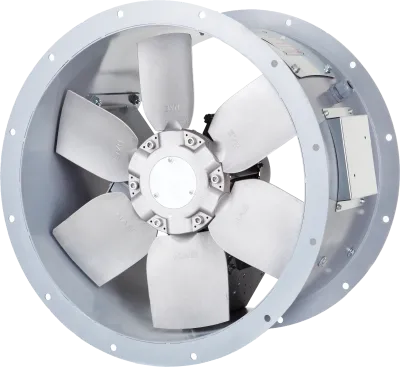
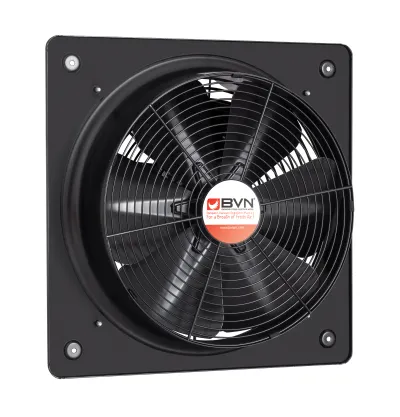
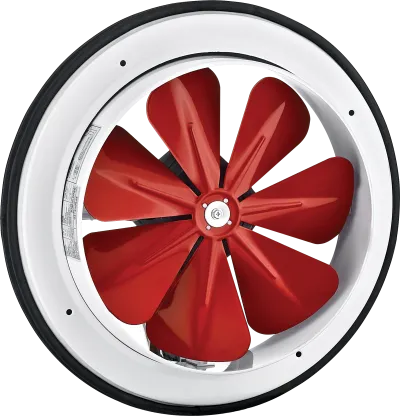
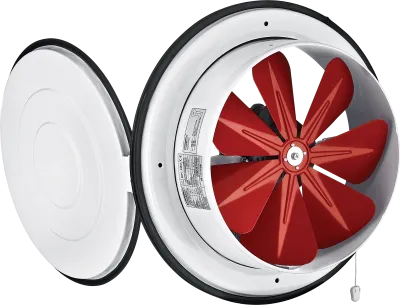
What is an axial fan?
An axial fan moves air parallel to the axis of blade rotation. Its design is particularly effective for moving large volumes of air when the ventilation system does not require overcoming very high resistance.
Axial fans are often used in:
- warehouses;
- industrial spaces;
- technical rooms;
- commercial buildings;
- car parks;
- general extract systems;
- direct air supply or extraction.
The application of a specific model should always match the manufacturer's technical data.
How does an axial fan work?
As the blades of an axial fan rotate, they move air along the axis. Put simply, air enters one side of the fan and leaves the other side in almost the same direction.
This principle differs from a radial fan, where the direction of air movement changes. The axial design is particularly practical when the main task is to obtain a large airflow in a relatively simple ventilation system.
When is an axial fan a good choice?
An axial fan is particularly interesting when:
- a large volume of air has to be moved;
- the ventilation network is relatively simple;
- system resistance is low or medium;
- air has to be extracted or supplied directly;
- the space needs fast air change.
For example, a large warehouse or industrial space often requires high airflow. In such an environment an axial fan can be an effective solution, provided the pressure requirement of the system is suitable as well.
How to select an axial fan
An axial fan should not be selected by diameter alone. Several key parameters need to be assessed at the same time.
1. What airflow is required?
Airflow is usually expressed in m3/h. The required amount depends on the volume of the space, the purpose of the facility, the number of people, the working process, the heat generated, humidity and the required air change rate. A higher m3/h figure does not automatically mean a better choice.
2. What resistance does the system have?
This is a particularly important question for axial fans. If the system contains many long ducts, bends, filters, dampers, grilles or other resistance creating components, a fan that works efficiently under higher pressure may be required.
3. What diameter is needed?
Diameter matters both for installation and for organising the airflow. However, two axial fans of the same diameter can differ significantly in capacity, pressure, motor power, noise level, rotation speed and operating temperature.
4. What is the operating environment?
You need to know the air temperature, whether humidity or dust is high, whether the environment is corrosive, and whether a special safety class is required. Compatibility with specific conditions must always be checked in the technical documentation of the model.
What is the difference between an axial and a radial fan?
The main difference between axial and radial fans lies in the principle of air movement and the pressure capability.
| Parameter | Axial fan | Radial fan |
|---|---|---|
| Air movement | Along the axis | Changes direction |
| Airflow | Often high | Medium or high |
| Pressure capability | Relatively low | Higher |
| Typical use | Simple network, direct air change | More complex duct systems |
| Construction | Compact | Often bulkier |
This does not mean that one type is better than the other. The right choice depends on the resistance of the ventilation system and the required operating point.
Can an axial fan be used in a duct system?
It is possible if the specific model is intended for duct installation and matches the resistance of the system. However, in a complex duct network where high pressure has to be overcome, choosing an axial design alone is not always optimal.
You should therefore assess the duct length, the number of bends, filters, grilles, other components and the required working pressure.
Does blade diameter matter?
The size of the fan affects its air moving capability, but diameter alone does not determine capacity. The real airflow is influenced by blade shape, rotation speed, motor power, casing design and system resistance. A larger diameter therefore does not automatically mean a better result.
How important is the noise level?
Noise requirements depend on the environment. In industry the priority in some cases is capacity, although workplace noise limits still have to be considered. In an office or commercial space the noise level becomes more important, especially when the unit is close to people.
The final noise does not depend on the fan alone - installation, air velocity, ducts and vibration all play a role.
What are the most common mistakes when selecting an axial fan?
Selecting by diameter only
Models of the same size can have completely different airflow and pressure capabilities.
Selecting by the highest m3/h only
The maximum airflow does not always reflect real operating conditions in a specific system.
Ignoring system resistance
This is particularly important for axial fans. If the network is complex, another type of construction may be more suitable.
Not considering the operating environment
Standard, high temperature, explosive or other special environments require different equipment.
Choosing an oversized fan
Unnecessarily high airflow can cause excessive noise, very high air velocity, increased energy consumption and uncomfortable system operation.
How do I know whether I need an axial or a radial fan?
First the system resistance has to be assessed. If a large airflow is needed and the system is relatively simple, an axial fan is often a good candidate. If the air has to pass a long and complex duct network where high pressure is required, a radial fan may be more suitable.
What information is needed to select a model?
Before selecting an axial fan it helps to know:
- the type of facility;
- the required airflow;
- the expected system resistance;
- the installation location of the fan;
- the required diameter;
- the working air temperature;
- the operating hours;
- the noise requirement;
- whether speed control is needed;
- whether special environmental or safety requirements apply.
With this data specific models can be compared more accurately.
Axial fans at NB Group
NB Group supplies axial fans in Georgia for various commercial and industrial ventilation systems.
When selecting a unit it is possible to assess the required airflow, working pressure, diameter, installation type, operating environment, noise level and control requirements.
For BVN models whose full technical information is presented on the manufacturer's Cloudair platform, the official technical page can be reached from the NB Group category. NB Group branches are located in Tbilisi and Batumi.
Frequently asked questions
An axial fan is a device that moves air in the direction of the blade rotation axis.
It is often used to supply or extract large volumes of air, particularly under relatively low system resistance.
An axial fan moves air directly along the axis and is often used for high airflow. A radial fan can create higher pressure and is used in complex duct systems.
Yes, if the specific model is intended for that and matches the resistance of the ventilation network.
You need to consider the required airflow, system resistance, diameter, working temperature, noise level and installation conditions.
Not necessarily. Alongside diameter, blade design, rotation speed, motor and system resistance also affect real capacity.
No. The fan has to match the real requirements of the specific space and ventilation system.
NB Group branches are located in Tbilisi and Batumi. Contact us for a consultation.