Roof Fans for Commercial Buildings in Georgia
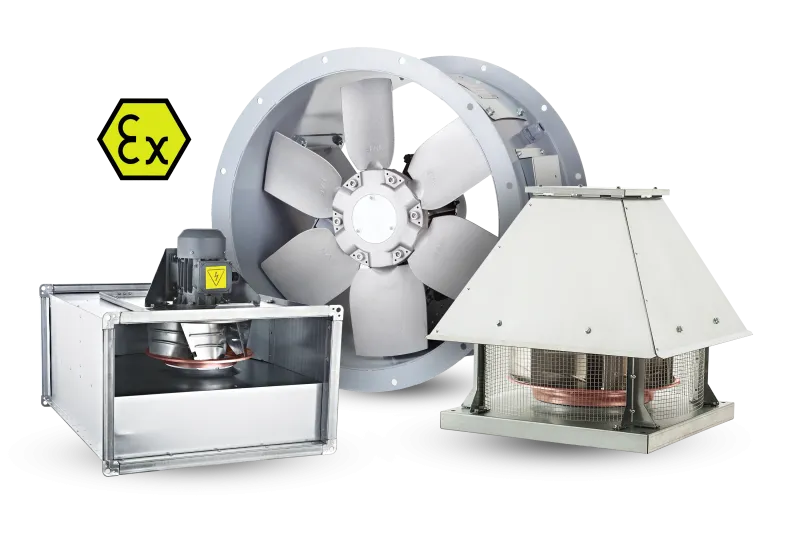
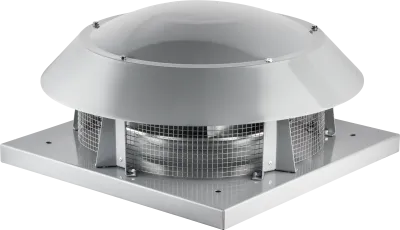
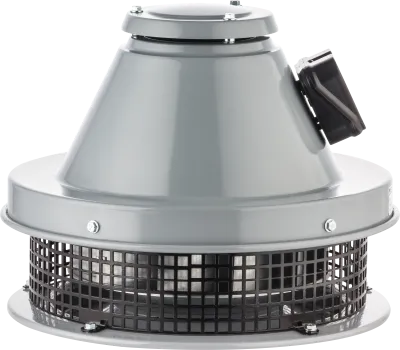
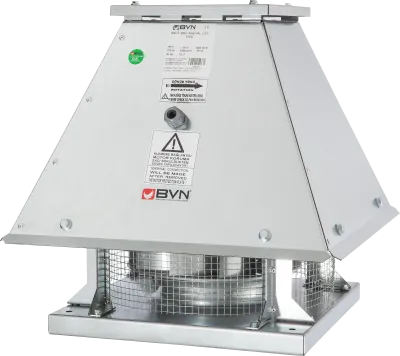
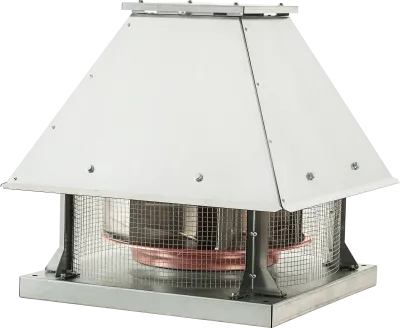
A roof fan is installed on the roof of a building and is used to extract air, odours, humidity or other emissions from the indoor space. The NB Group range includes roof fans of various types and capacities for commercial and industrial ventilation systems.
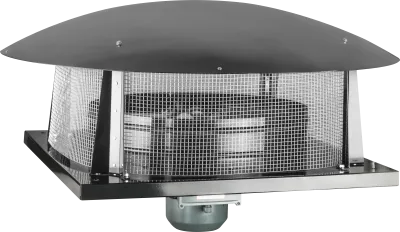
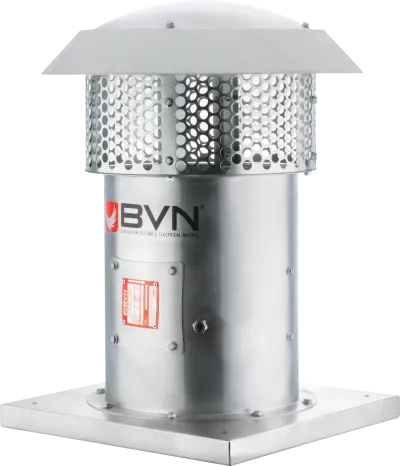
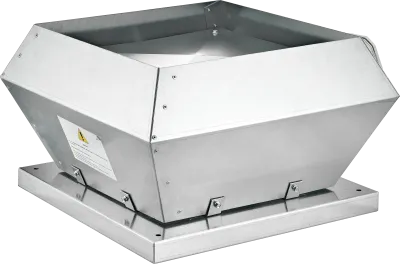
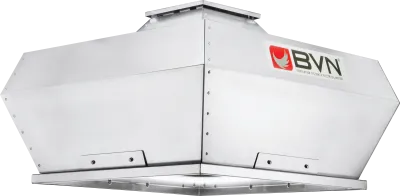
When is a roof fan used?
A roof fan is used when extracting air through the roof of the building is technically or practically reasonable.
Such a system is often used in:
- industrial facilities;
- warehouses;
- retail spaces;
- restaurants and commercial kitchens;
- office buildings;
- technical and auxiliary spaces;
- large commercial buildings.
Roof installation allows the extract unit to be placed away from working or living areas, although this does not mean that location alone determines the selection. The fan has to match the entire ventilation network.
How does a roof fan work?
A roof fan creates air movement in the ventilation duct and removes air from the indoor space to the outside of the building.
The system may consist of:
- extract grilles;
- ductwork;
- dampers and other components;
- the roof fan;
- a suitable mounting base and protective elements on the roof.
The longer and more complex the ventilation network, the more resistance the fan has to overcome. This is why a roof fan should not be selected by its maximum m3/h figure alone.
How to select a roof fan
Selecting the right model requires assessing the required airflow, system resistance, operating conditions and the installation location together.
1. How much air has to be extracted?
The first parameter is the required airflow, usually expressed in m3/h.
The required volume depends on:
- the size of the space;
- its purpose;
- the number of people;
- the working process;
- the amount of humidity, odour or other emissions generated;
- the required air change rate.
A large airflow does not always give a better result. The main goal is to achieve the required air change in the correct operating mode.
2. What resistance does the system create?
Resistance in a duct network is created by duct length, bends, transitions, grilles, filters, dampers and other equipment. This is why two fans with the same maximum capacity can perform differently in a specific system.
3. What air temperature passes through the system?
Ordinary ventilation air and high temperature extract are not the same operating conditions. If high temperature air movement is expected in the system, a model designed specifically for those conditions must be selected.
4. What is the environment on the roof?
A roof fan works outdoors. The following are therefore important:
- protection from precipitation;
- temperature changes;
- wind exposure;
- installation quality;
- suitable protection of the casing and electrical parts.
The specific protection class and operating range must always be checked in the technical documentation of the model.
What are the advantages of roof installation?
Placing the unit on the roof can bring several practical advantages.
The unit is outside the working area
The fan is not placed directly in an office, hall or industrial space.
Extract air goes straight outside
With a properly built system, air is removed from the upper part of the building.
A centralised extract network can be served
One ventilation system can combine several extract points and end at the roof fan.
Space saving
In some cases moving the unit to the roof frees technical space inside the building.
These advantages should always be assessed according to the conditions of the specific project.
What is the difference between a roof fan and a duct fan?
The main difference lies in the installation location and the functional position in the system.
| Parameter | Roof fan | Duct fan |
|---|---|---|
| Installation location | On the roof | In the ductwork |
| Typical function | Extracting air from the building | Supply or extraction of air |
| Exposure to the outdoor environment | High | Usually low |
| Position in the system | Often at the end of the duct | In various sections of the duct |
| Use | Centralised extract system | Various ventilation systems |
Which type is better depends not on a general advantage, but on the architecture of the specific ventilation system.
Roof fan or axial fan?
These two categories are not always directly comparable. "Roof fan" mainly describes the installation location and construction, while "axial fan" describes the principle of air movement.
Different fan constructions can be used on a roof. When selecting, it is therefore better to ask: what airflow, what pressure and what operating conditions does this specific roof mounted system need?
In which facilities are roof fans used?
Industrial facility
An industrial space may require continuous extraction of large volumes of air. In such cases attention is paid to capacity, pressure, running time, air temperature and the working environment.
Warehouse
In large warehouses air circulation and control of the indoor environment are important. An extract system can be used to remove excess heat, humidity or other air contaminants.
Restaurant and commercial kitchen
Here, in addition to ordinary ventilation, high temperature, grease particles, odours and the resistance of the extract duct have to be considered. Not every roof fan is automatically suitable for a kitchen.
Retail or commercial building
In large spaces a roof fan can be part of a centralised extract system. Compatibility with the overall ventilation design is particularly important here.
What are the most common mistakes when selecting a roof fan?
Selecting by maximum capacity only
The maximum m3/h stated in a catalogue does not always correspond to the real result achieved in a specific ventilation system.
Ignoring system resistance
Long ducts, bends and other components slow the air movement.
Not considering the outdoor environment
A roof fan works in the open, and compatibility with outdoor conditions is essential.
Incorrectly assessing the operating temperature
A fan designed for ordinary air may not be intended for high temperature air.
Overlooking service access
Roof mounted equipment may require periodic inspection and maintenance. Technical access has to be considered during installation.
What data is needed to select the right model?
Before selecting a roof fan it helps to know:
- the type of facility;
- the required airflow;
- the layout of the ventilation ducts;
- the pressure the unit may need to overcome;
- the air temperature passing through the system;
- how many hours the system will run;
- how important the noise level is;
- the conditions on the roof;
- whether special safety requirements apply;
- how the unit will be serviced afterwards.
With this data specific models can be compared much more accurately.
How do I know that a roof fan has been selected correctly?
A correctly selected fan should provide the required airflow under the working resistance conditions of the specific system, and at the same time match the environment, temperature and operating requirements.
The fact that a fan runs does not yet mean that the system is functioning optimally.
Signs of an incorrect selection can include:
- insufficient air extraction;
- excessive noise;
- vibration;
- unstable system operation;
- excessive energy consumption;
- frequent overloading of the unit.
In such cases not only the fan but the entire ventilation network needs to be assessed.
Roof fans at NB Group
NB Group supplies roof fans in Georgia for commercial, industrial and other ventilation systems.
When selecting a specific model it is possible to assess the required airflow, the parameters of the ventilation network, working temperature, installation conditions and the purpose of the facility.
For BVN products whose detailed technical information is presented on the manufacturer's platform, the official Cloudair page can be reached from the NB Group category. NB Group branches are located in Tbilisi and Batumi, and technical consultation is available when selecting suitable ventilation equipment.
Frequently asked questions
A roof fan is a ventilation unit installed on the roof, mainly used to extract air from a building.
They are used in industrial facilities, warehouses, commercial buildings, restaurants, offices and other places where extract air is removed through the roof.
You need to consider the required airflow, system resistance, air temperature, the outdoor environment and the requirements of the specific facility.
No. Fan capacity has to match the requirements of the specific ventilation network.
A roof fan is installed on the roof, while a duct fan is installed directly in the ductwork. Both can work in an extract system, but their construction and operating conditions differ.
Only with a model intended for that purpose. For a professional kitchen the air temperature, grease content and other technical conditions of the extract system have to be considered.
Yes. Periodic inspection, cleaning and, where necessary, technical service are important for reliable operation of the unit.
NB Group branches are located in Tbilisi and Batumi. Contact us for a consultation.